
How do you give every player a custom character sheet — without standing up a dev team?
The opportunity
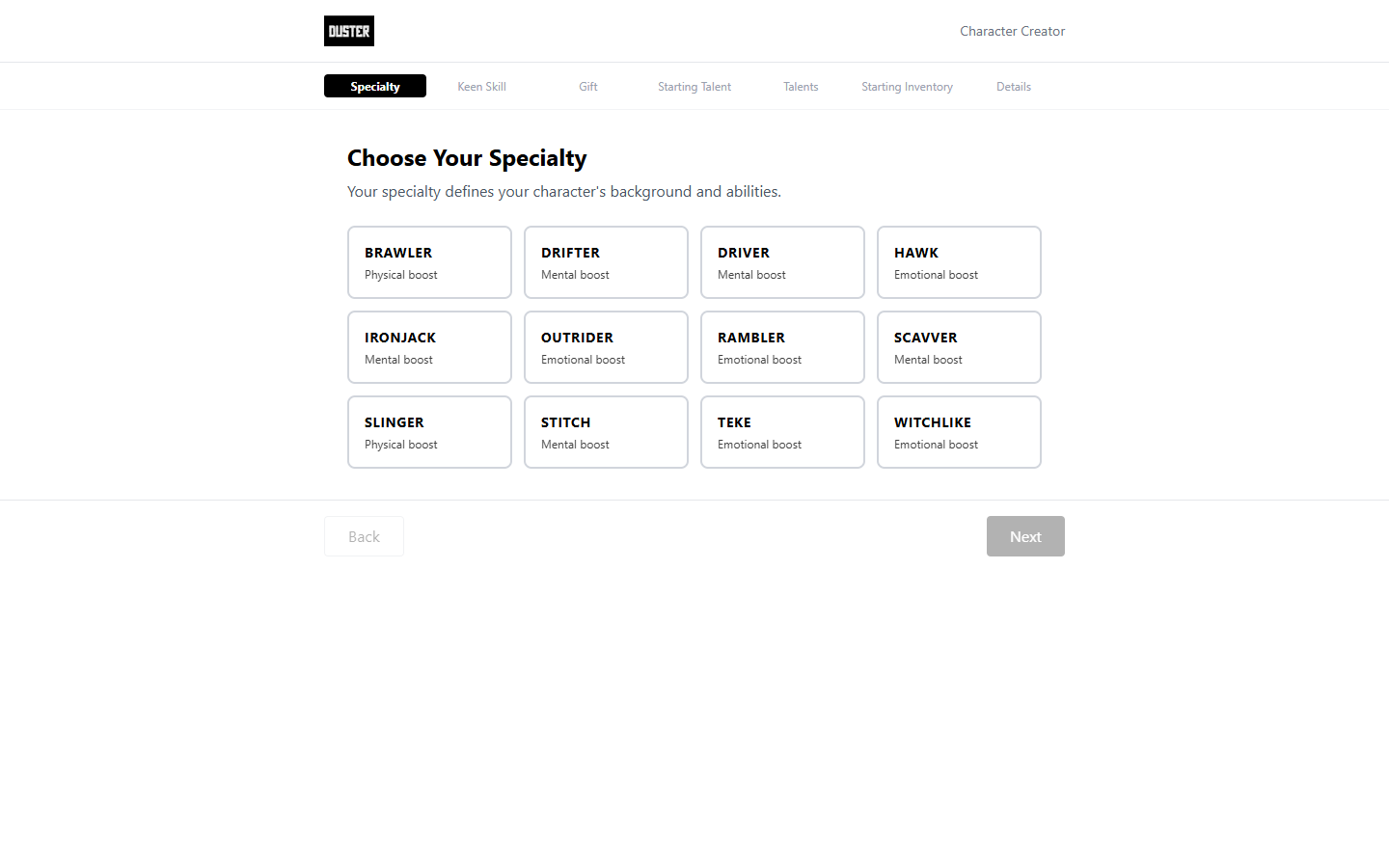
Occupied Hex publishes Duster, a post-apocalyptic western tabletop RPG. Andrew and his players already knew what a premium, web-based character creator could feel like — they'd used the polished ones built for other systems. The opportunity was to bring that experience to Duster, faster and far cheaper than Andrew expected. Before this, players built their characters in a convoluted spreadsheet while flipping through the player handbook — and walked away with no character sheet at the end. The brief started narrow — a way for players to quickly generate an editable PDF — and we reframed it into a proper, rules-driven step-by-step creator, living on the Duster homepage rather than as a hidden tool.
What made it look impossible
A character system where some choices are the player's to make and some are randomly generated — each one constraining the next. Andrew thought the sheer amount of interlocking information made a clean web tool unrealistic.
The approach — a sequence of product calls
Map the system before designing the screens. We modeled the full rule set and its data validation first; only once every component and constraint was correct did the creation flow become a design problem.
Sequence it the way a player thinks. Drawing on first-hand tabletop experience, we ordered creation so the big, identity-defining choices come first and cascade into the smaller ones that depend on them — so players see what's open to them, feel good about each choice, and build a character they're excited to play.
Decide what it isn't. Duster is a pencil-and-paper game; a character you have to manage on your phone pulls you out of that. So this is a setup tool that gets players to the table fast — not a digital anchor. No accounts, no persistence, no in-session management.
Nail the output and the experience. Success meant both at once: the exported PDF had to match Andrew's original character sheet exactly, and the creation process had to make sense — players understanding their options, getting excited, and playing faster than before.
Working together
Feedback ran in tight rounds, focused mostly on data-validation correctness — making sure the choices a player makes up front correlate exactly to the rest of the decision tree. Deep familiarity with the system made triaging each round fast: what to act on, what to defer.
With a non-technical client, smooth came from the basics done well — clear deliverables, equally clear implementation instructions, and being available to answer questions. The deliverable worth repeating on any engagement: turnkey handoff documentation that let Andrew embed the web app on his own site himself, no developer required.
The result
Shipped to live playtesting, with four rounds of Andrew's feedback folded in — each tested end-to-end before deploy.
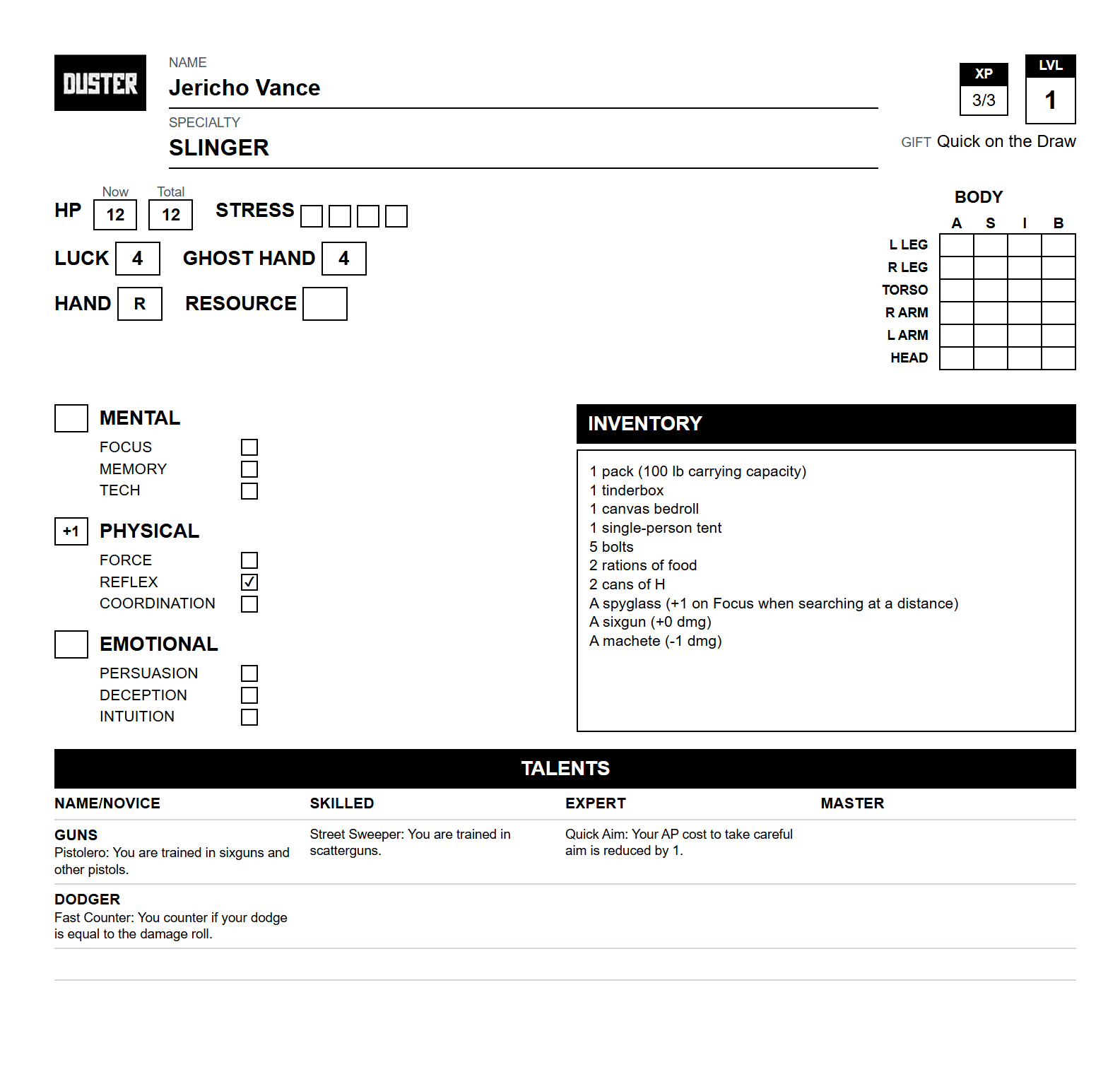
“Watson designed a character creation tool for my website that exceeded all my expectations. I honestly thought the project would be impossible given the sheer amount of information necessary and the fact that some choices were made by the user and some were randomly generated. Watson's tool was clean and user-friendly and got literal oohs and aahs from my customers. He couldn't be easier to work with and I was very impressed with the end result.”
— Andrew, Occupied Hex Games
Services Provided
- Product consulting and strategy
- Bespoke player-facing tool design and development
- AI-native delivery
- Turnkey handoff documentation and implementation support